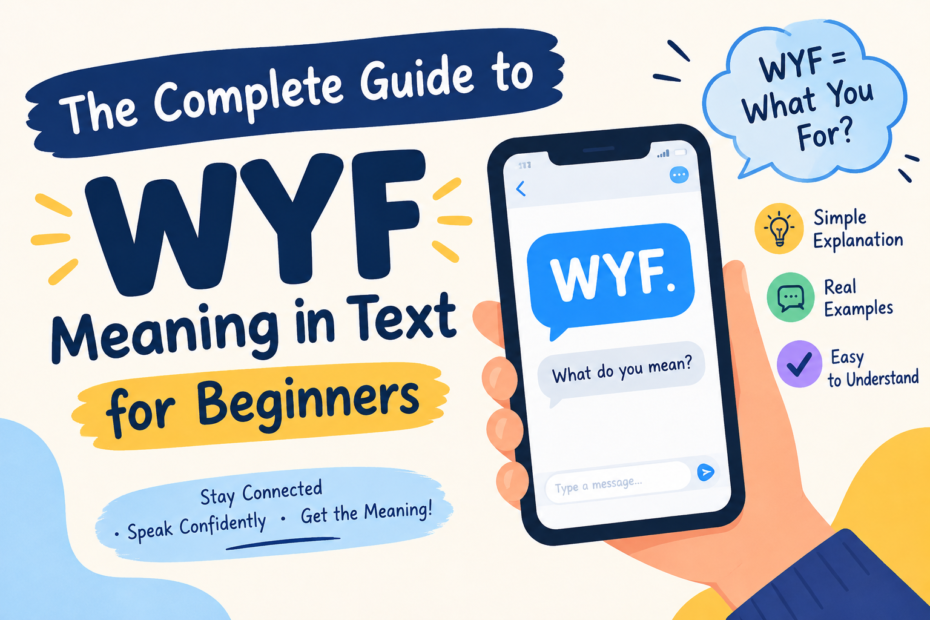
WYF meaning in text depends on the conversation, but it usually stands for where are you from. This guide explains what WYF means and how to reply.
What Does WYF Mean in Text?
Quick answer: In most casual chats, WYF stands for “Where’re you from?” It’s a short way to ask what city, region, or country someone lives in or comes from.
That’s the meaning you’ll see most often on social apps, gaYou open a message from someone new and it says “wyf?” If you’re wondering about the WYF meaning in text, you’re not alone. Texting abbreviations change constantly, and this one has more than one meaning. This guide explains what WYF stands for, how to tell which meaning someone intends, and how to reply.ming chats, and when people meet online. Because the abbreviation is so short, it can also mean other things depending on the context.
The Main WYF Meanings Explained
1. “Where’re You From?”
This is the most common WYF meaning in text. It usually appears early in a conversation, when two people are getting to know each other.
Examples:
- “hey, wyf?”
- “nice to meet you! wyf”
The usual answer is a city or country: “I’m from Lahore, you?”
2. “What’re You Feeling?”
Less commonly, WYF can mean “What’re you feeling?” or “What’s your feeling?” You’ll mostly see it between close friends, often as a casual check-in about mood or about a plan (“wyf about pizza tonight?”).
Because this use is rarer, it usually only makes sense when the conversation is already about moods, opinions, or plans.
3. “Wife” (Stylized Spelling)
In some online communities, people write “wyf” as a playful or stylized spelling of “wife,” similar to “wifey.” If someone says “my wyf is making dinner,” they mean their wife. In that sentence the word is a noun, not a question.
Why So Many Meanings?
Slang isn’t governed by a dictionary. Communities invent and reuse short forms, so the same letters can mean different things in different groups. Ask yourself two things when you see WYF:
- Is it a question or a statement? A standalone “wyf?” is almost always a question.
- Who’s sending it? A stranger probably means “where’re you from?” A close friend might mean something else.
How to Tell Which WYF Meaning Someone Intends
You don’t need to guess. Look at the clues:
Position in the conversation. If it appears in the first few messages, it’s almost certainly about location.
Punctuation. A question mark points to “where’re you from?” or “what’re you feeling?” No question mark and a noun position (like “my wyf”) points to “wife.”
The platform. On dating apps, social networks, and multiplayer game chats, expect the location meaning. In a small private chat with someone you know well, it could be anything.
Surrounding words. “Wyf and wyd?” in a get-to-know-you chat is just two quick questions.
If you’re still unsure, asking is fine. A simple “Do you mean where I’m from?” avoids an awkward misunderstanding.
How to Reply When Someone Texts “WYF?”
For the location meaning, keep your answer short and casual:
- “Pakistan, you?”
- “I’m from Lahore! How about you?”
- “Canada. wyf?”
A safety note: You don’t have to share exact details with someone you’ve just met online. A country or a general region is enough. Avoid giving your street, workplace, or school to strangers. If someone pushes for more than you’re comfortable with, you can decline or stop replying.
For the “feeling” meaning, answer with your mood or opinion: “I’m feeling good, let’s do it” or “not feeling it tonight.”
WYF vs. Similar Texting Abbreviations
Many people confuse WYF with other short forms. Here is how they differ:
| Abbreviation | Meaning |
|---|---|
| WYF | Where’re you from? (most common) |
| WYD | What’re you doing? |
| WYA | Where’re you at? |
| WBU | What about you? |
| HMU | Hit me up (contact me) |
| ASL | Age, sex, location (older chat-room slang) |
The biggest mix-up is WYF versus WYA. WYF asks where you come from in general. WYA asks where you are right now. If a friend texts “wya?” they want to know your current location, probably because they’re waiting for you.
Is It Okay to Use WYF in Text?
It depends on who you’re talking to and where.
Good places for WYF:
- Casual chats with friends
- Social media and gaming chats
- Informal first messages on apps
Better to avoid it:
- Work emails or professional messages
- Messages to teachers, clients, or older relatives who may not know the slang
- Any conversation where clarity matters more than speed
When in doubt, write the full question. “Where are you from?” is never wrong, and it works with everyone.
Tips for Learning Texting Slang Without Feeling Lost
- Read the context first. Most abbreviations make sense once you read the whole message.
- Ask politely. Nobody expects you to know every new term.
- Check a reliable source. Slang dictionaries and community glossaries are updated more often than traditional references.
- Don’t force it. Using slang you don’t fully understand can lead to confusing replies.
(Internal link opportunities: a related guide on common texting abbreviations, a post on WYD and WYA meanings, and an article on staying safe in online chats.)
FAQ: WYF Meaning in Text
What does WYF mean in a text message?
It most often means “Where’re you from?” It can also mean “What’re you feeling?” or, in stylized spelling, “wife,” depending on context.
Is WYF the same as WYD?
No. WYF usually asks where you’re from, while WYD asks what you’re doing right now.
Is it rude to ask “wyf?”
Not normally. It’s a friendly opener, but be mindful of the setting. In a professional or formal chat, a full sentence is more polite.
How do I answer “wyf?” safely?
Share only general information, like your country or region. You don’t need to give a specific address or personal details to someone you’ve just met.
Is WYF still used in 2026?
Yes, though how popular it is varies by app and community. Slang shifts quickly, so check the context rather than assuming.
Conclusion
The WYF meaning in text is usually simple: it’s a quick way to ask where someone is from. It can occasionally mean “what’re you feeling?” or serve as a playful spelling of “wife,” so the surrounding conversation matters. Read the context, reply with only what you’re comfortable sharing, and write out full sentences in formal settings.